
The Difference Between a Swamp, Marsh, and Bog: A Simple Explainer
Marshes grow grasses, swamps grow trees, bogs grow moss — and the water's source tells you which one you're standing in.
The Difference Between a Swamp, Marsh, and Bog: A Simple Explainer
Stand at the edge of a cattail-choked pond in Ohio, then in a cypress slough in Louisiana, then on a quaking mat of moss in northern Minnesota, and you are looking at three wetlands most people would call by the wrong name. All three are wet, all three smell of mud and green things, and all three show up on maps as vague blue-green smudges.
The shortest version: a marsh is a wet field of grass, a swamp is a wet forest, and a bog is a wet sponge made of moss. Each description points to something deeper — where the water comes from, what the soil is made of, and which plants can survive there. Work through those three, and the names sort themselves out.
Water Source Comes First
Of the three traits, the source of the water is the most useful, because it drives the other two.
Marshes and swamps are usually fed by surface water or groundwater: a river that floods its banks, a lake that backs up, a high water table, or tides pushing in twice a day. Water moves through them, and moving water carries minerals and nutrients. That makes most marshes and swamps fertile places, which is why they are so loud with frogs, insects, and birds. The Everglades, for instance, is a vast freshwater marsh fed by slow sheet flow from Lake Okeechobee; the Great Dismal Swamp in Virginia and North Carolina is a forested wetland fed by rain, groundwater, and slow drainage.
Bogs are fed almost entirely by rain and snow. Nothing flows in from upstream, so the only minerals a bog receives are the ones that fall from the sky or blow in as dust. The result is water that is acidic and poor in nutrients, and nearly everything else about a bog follows from that. A bog is, in effect, a wetland that lives on rainfall alone — which is why it can sit on a hilltop or in a glacial hollow with no stream in sight.
That single difference — flowing, mineral-rich water versus stagnant, mineral-poor rainwater — explains why a marsh can grow a jungle of cattails while a bog can barely support a stunted spruce.
Marshes: Open Ground, Soft-Stemmed Plants
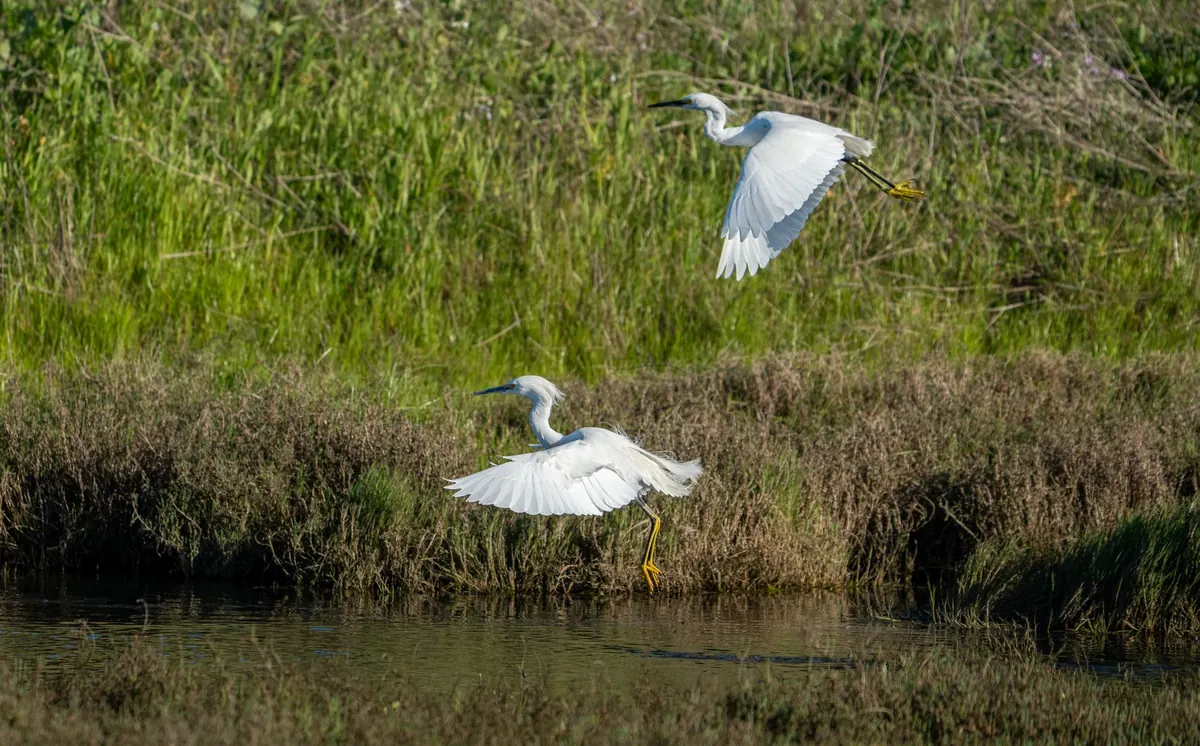
A marsh is a wetland dominated by herbaceous plants — soft green stems that die back each year rather than forming wood. Cattails, bulrushes, sedges, reeds, pickerelweed, and arrowhead are the classic cast. In the Midwest, Horicon Marsh in Wisconsin is a textbook example: thousands of acres of cattail, open water, and mudflats that fill with migrating waterfowl.
The soil is mineral mud, often dark and rich, and water sits at or just below the surface for most of the year. Freshwater marshes ring lakes and rivers. Salt marshes line sheltered coasts, where the plants switch to salt-tolerant species such as cordgrass and the tide sets the schedule. In a salt marsh, the daily flood and ebb leave behind channels, pannes, and a smell of sulfur that is unmistakable.
Field clue: you look across a marsh, not into it. Wind moves over the top in visible waves. There are no trunks to walk around, and the ground underfoot is muck rather than a floating mat.
Swamps: Trees With Their Feet in the Water
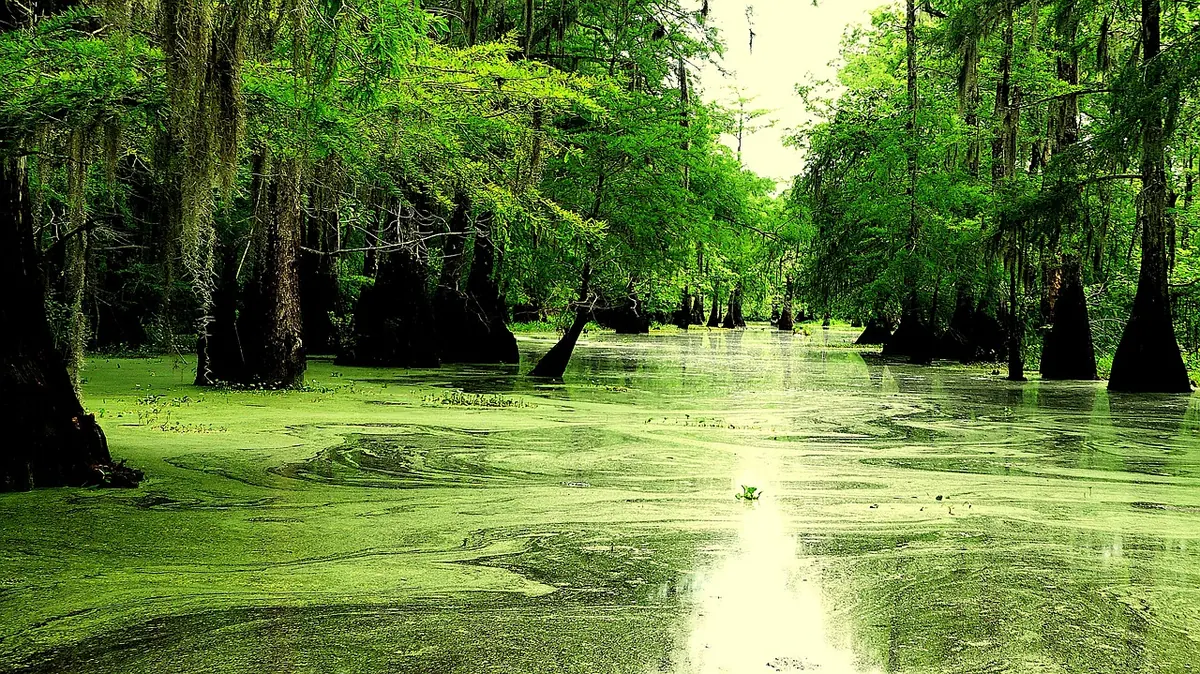
A swamp is a wetland dominated by woody plants — trees and shrubs. Bald cypress, tupelo, red maple, willows, alder, and, along tropical coasts, mangroves. The Atchafalaya Basin in Louisiana and the Congaree in South Carolina are classic examples, with buttressed trunks, dark water, and a canopy that closes overhead.
Water stands in a swamp for much of the year, or the soil stays saturated close to the surface. It tends to be still and dark, stained by tannins leached from leaves and bark. Some swamps sit on mineral soil; others slowly build up peat beneath the trees. The tea-colored water is not dirty — it is stained like steeped leaves, and it can be surprisingly clear.
Swamps are not simply old marshes that grew trees. They need water that lingers without being too deep or too fast, which is why they form along slow rivers, in floodplain hollows, and in the flat ground behind coastal barriers.
Field clue: you are looking into a forest. Trunks may be flared at the base, and cypresses send up knobby roots that poke above the waterline. In a mangrove swamp, the roots arch down like stilts, and the water may be salty.
Bogs: Sphagnum, Acid, and Deep Time
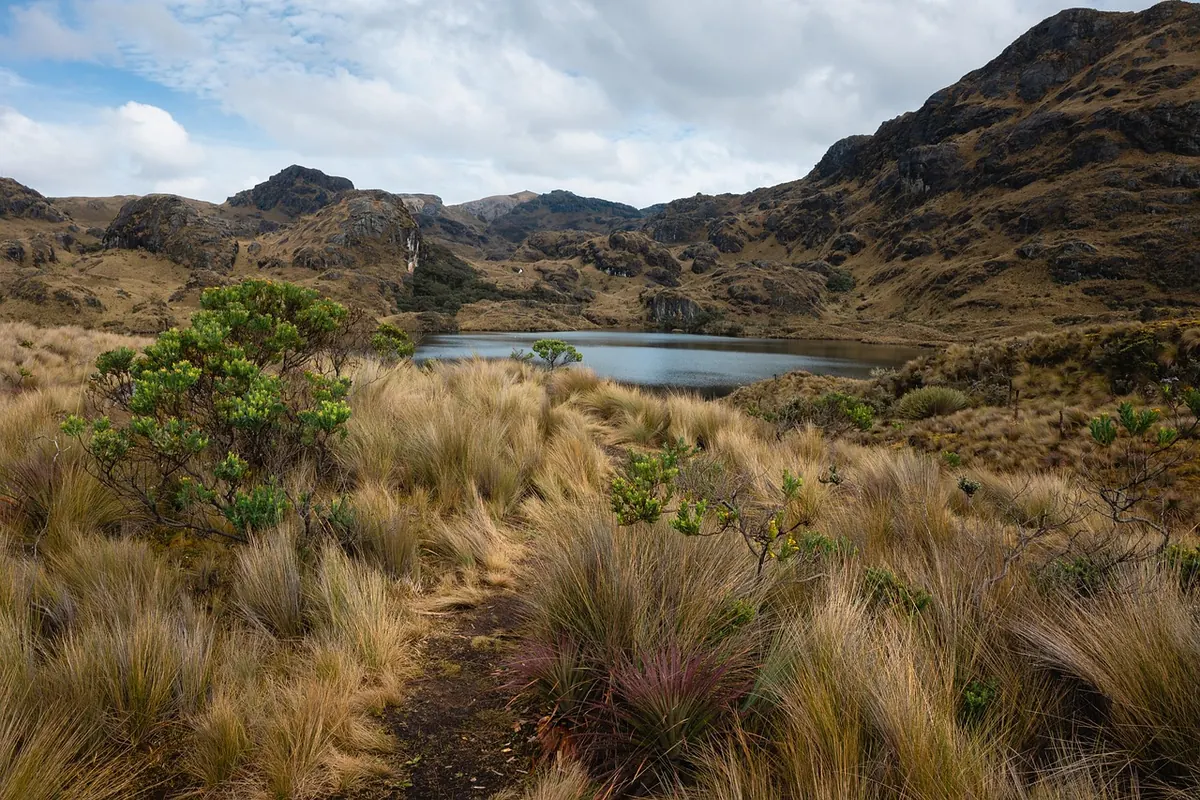
A bog is built by moss. Sphagnum holds water like a sponge, releases acids that push the pH down, and decays so slowly that dead moss piles up as peat instead of breaking down. A bog grows upward, century by century, on its own remains. Some northern peatlands are thousands of years old and many feet deep; the peat is an archive of pollen, dust, and even human artifacts.
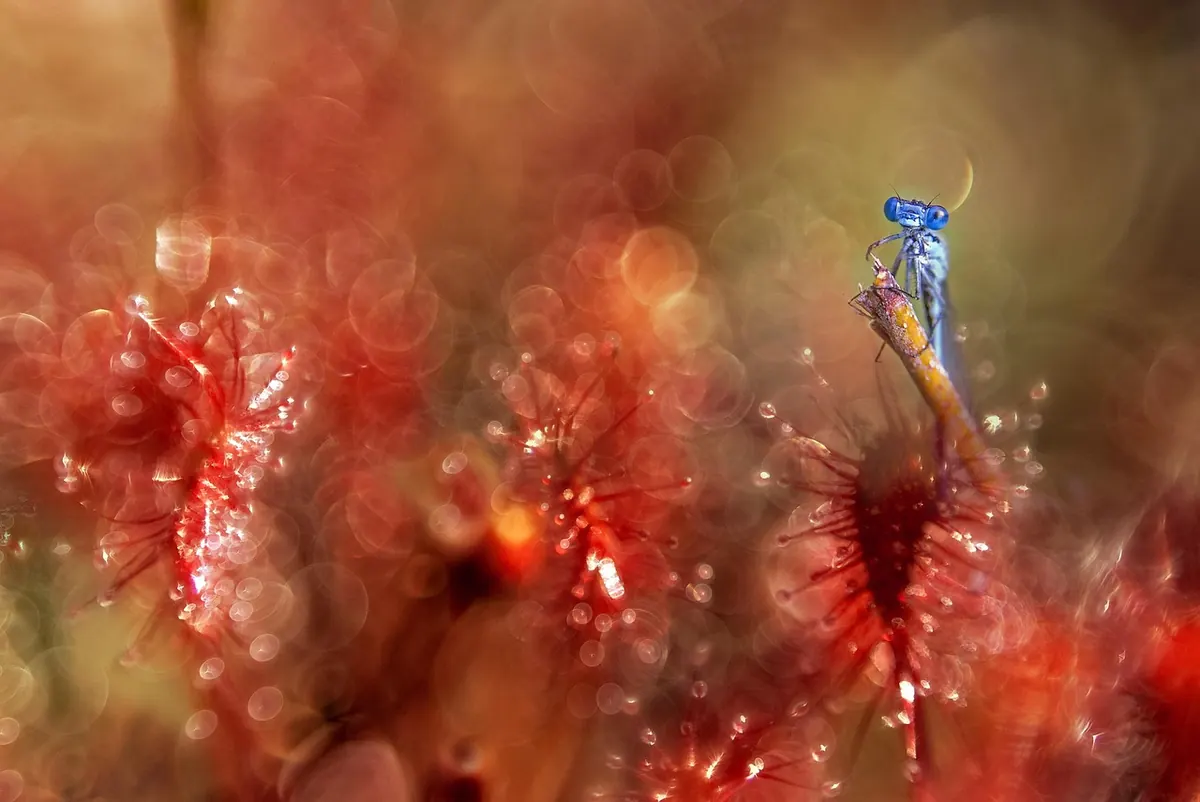
Because the water is acidic and low in nitrogen, bog plants are specialists: cranberries, bog rosemary, leatherleaf, cotton grass. You also find carnivorous plants such as pitcher plants and sundews, which supplement their diet by catching insects. Trees, where they grow at all, are stunted — tamarack, black spruce, a few scraggly pines.
Field clue: a carpet of bright green or rusty-red moss, hummocky ground that shifts when you step, and small pools of tea-colored water sitting in the hollows. If you feel like you are walking on a mattress, you are probably on a bog.
Where Do Fens Fit?
Fens are the wetland people most often mistake for bogs, and the difference is the water again. A bog gets rain only. A fen gets rain and groundwater, and groundwater brings minerals. So a fen is less acidic and richer in nutrients, and it supports far more plants: sedges, grasses, orchids, and brown mosses alongside the sphagnum.
If a mossy wetland has a spring or slow seep feeding it, or if it is crowded with sedges and grass-like plants, you are probably standing in a fen. Not every field guide treats fens as a separate category, but once you notice the mineral-rich water, the difference is clear. Fens are also globally rare, because they depend on specific groundwater conditions that are easily disrupted by drainage or nearby development.
A Quick Field Test
If you are standing in a wetland and want to name it, ask these questions in order:
- What is the dominant vegetation? Soft-stemmed grasses, sedges, and cattails point to a marsh. Trees and shrubs point to a swamp. Sphagnum moss and stunted, scattered trees point to a bog or fen.
- Where does the water come from? A river, lake, tide, or groundwater suggests marsh or swamp. Rain only, with no inlet or outlet, suggests bog. Groundwater seepage with moss and sedges suggests fen.
- What does the ground feel like? Muck and mud suggest marsh or swamp. A spongy, quaking mat suggests bog or fen. Deep peat is a strong sign of a bog.
- What color is the water? Clear to muddy water is typical of marsh and swamp. Tea-colored, acidic water is typical of bog and fen.
No single clue is perfect. A swamp can have patches of marsh, and a bog can have a fen at its edge. But the combination usually gets you close.
Why the Distinction Matters
These names are not just trivia. Wetlands are regulated, restored, and managed differently depending on what they are. A marsh and a swamp can often be reconnected to a river or tide with relatively simple work. A bog cannot be recreated quickly: its peat took thousands of years to accumulate, and its hydrology depends on rainfall alone. Draining a bog releases stored carbon and turns a slow-growing ecosystem into a dry, flammable one.
Fens are even more sensitive. Because they rely on groundwater, they can be damaged by a change in water table far from the wetland itself. A new well, a drainage ditch, or a housing development uphill can dry a fen and shift its plant community within a few years.
Knowing the difference also changes what you see. A marsh is a nursery for fish and amphibians. A swamp is a carbon sink and a flood buffer. A bog is a living archive of climate history. They are all wet, but they are not interchangeable.
Wetlands are not all the same. The water source writes the rules, and the plants read them back to us.
So the next time you stand at the edge of something wet and green, look at what is growing, where the water comes from, and what the ground does under your boots. The name will usually follow.
Photo: Superbamboe / Pixabay