
Reading Water Quality in a Marsh: A Beginner's Guide to Clarity, Algae, and Indicator Species
Learn to judge marsh water quality with your eyes and a notebook — what clarity, color, algae, plants, and small animals reveal about the wetland in front of you.
Marsh water is supposed to look a little dirty. The tea-brown stain of tannins, the silt that puffs up under your boots, the green film on a submerged log — none of that automatically means something is wrong. A healthy wetland is a slow, muddy, nutrient-rich place, and it looks like one.
That is exactly why reading water quality here takes a different kind of attention than reading a mountain stream. You are not hunting for crystal clarity. You are hunting for the pattern: what is growing, what is missing, what smells wrong, and what has changed since your last visit. A kitchen spoon, a white ice-cube tray, and a notebook will get you further than you think.
Start With the Surface
Before you identify a single plant or insect, stand still and look at the water as one object. Give it a full minute. Ripples hide a lot, so wait for a calm moment.
Color and clarity
- Clear amber or brown, like weak tea. Usually tannins from leaves and peat. Natural, especially in wooded or bog-fed marshes.
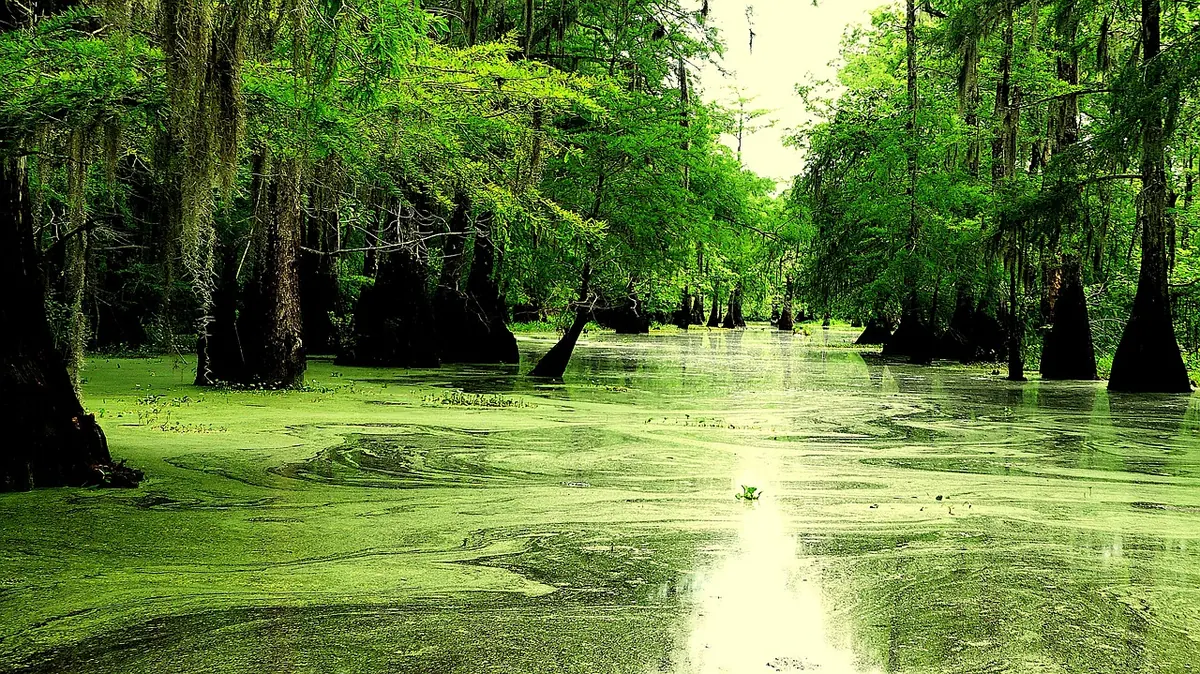
- Uniform green tint. Algae suspended in the water column, not just on surfaces. A light tint is normal in summer; pea soup is not.
- Milky grey or tan. Suspended sediment. Common after heavy rain, but persistent murk can point to bank erosion or upstream runoff.
- Rusty orange fluff or sheen. Often iron bacteria, which thrive where groundwater seeps in. Unpleasant-looking, generally harmless.
- Rainbow sheen. Poke it with a stick. A petroleum sheen swirls and reforms; a natural bacterial film breaks into flakes and does not knit back together.
Smell
Rotten eggs means hydrogen sulfide, which means low oxygen and decaying muck. An earthy, musty, wet-soil smell is normal. A sharp chemical or sewage smell is not, and it is worth reporting to your local watershed group or environmental agency.
Read Algae Carefully
Algae is the most misread clue in a marsh, mostly because three different things get called by the same name.
Filamentous algae looks like wet green hair or cotton, usually attached to sticks and stones, sometimes floating in mats. Planktonic algae turns the water itself green. Cyanobacteria — often called blue-green algae — forms scum that looks like spilled paint or pea soup, sometimes with a metallic or rotting-grass smell, and often concentrates along a windward shore.
Duckweed is not algae at all. Look closely: it is a tiny plant with one to three flat leaves and a single thin root dangling beneath. A duckweed blanket tells you the water is still and nutrient-rich, which is a land-use story, not a poison story.
Some algae in a marsh is normal and productive — it feeds the whole food web. Trouble shows up when growth covers most of the surface through the season, blocks light from submerged plants, and then dies in a mass. Decomposition strips oxygen from the water, and that is when fish and amphibians suffer.
A scum-covered marsh is not automatically a dead marsh. It is a marsh that is receiving more nutrients than it can comfortably absorb.
Safety note: keep dogs and children out of thick green scum, and wash your hands after handling plants or water. Cyanobacteria can produce toxins, and symptoms after exposure deserve a call to a doctor or vet rather than a wait-and-see approach.
Let the Plants Do the Remembering
Animals move. Plants cannot, which makes them honest, slow-motion records of conditions across an entire season.
A diverse emergent edge — cattails, bulrush, sedges, arrowhead, pickerelweed — suggests a functioning marsh. A solid monoculture of one aggressive species, such as invasive phragmites or purple loosestrife, often signals past disturbance: ditching, dredging, road salt, or heavy nutrient input.
Then look underwater. Submerged plants like coontail, pondweed, and bladderwort should have leaves you can actually see. When every leaf wears a fuzzy grey-green coat of algae, the water is carrying more nutrients than the plants can out-compete. Clean submerged plants in water with only a light green tint are one of the best signs a marsh can give you.
Indicator Animals: The Small Ones Vote First
You do not need a net or a microscope. Roll over three or four submerged sticks, leaves, or stones and inspect the undersides over a white tray. The creatures clinging there sort themselves into rough groups.
- Pollution-sensitive: mayfly and stonefly nymphs, caddisfly larvae in their cases, hellgrammites, water pennies. Finding these suggests cool, well-oxygenated water.
- Moderate: dragonfly and damselfly nymphs, scuds, crayfish, most snails, planarians.
- Tolerant: midge larvae, aquatic sowbugs, leeches, aquatic worms, rat-tailed maggots, mosquito larvae. These thrive where oxygen is low and organic muck is rich.
One tolerant creature means nothing. A community made almost entirely of them, with no sensitive species anywhere, tells you the marsh is working hard to process a heavy organic load.
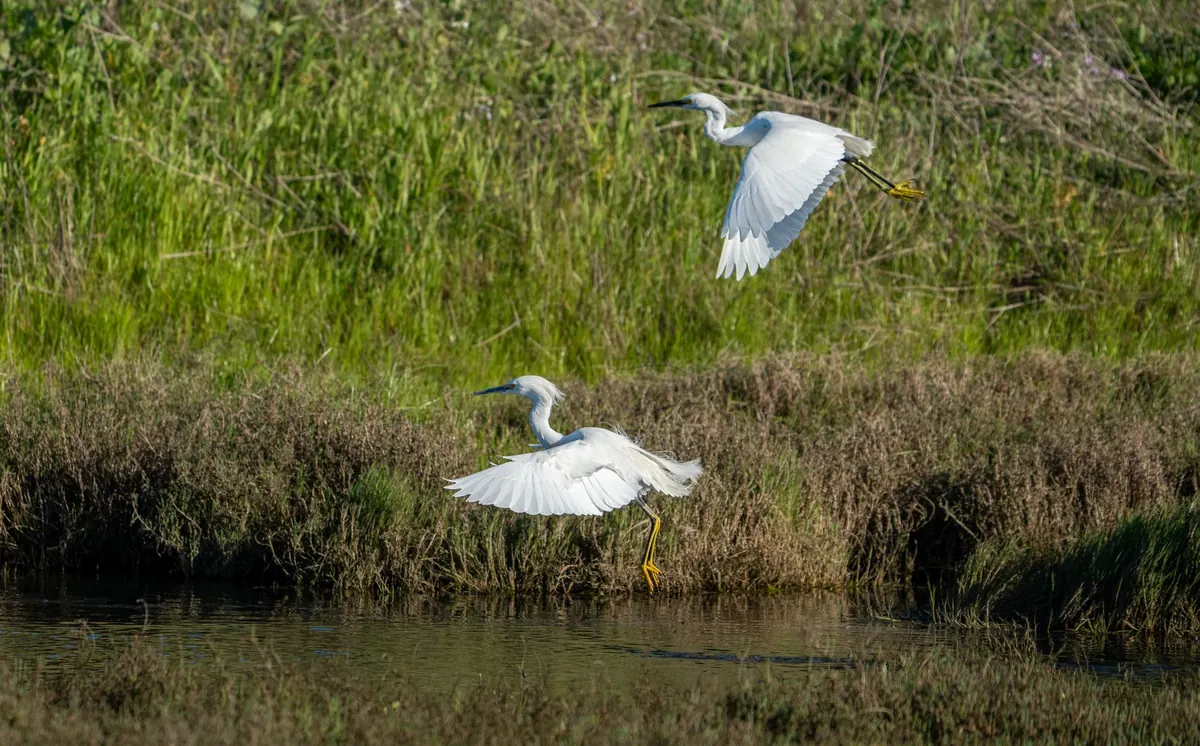
Larger animals help too, with caveats. Spring peepers and green frogs calling from the edge, herons and kingfishers working the shallows, and small fish flashing between stems all suggest a food web with some depth. Their absence might mean poor conditions, or it might just mean you arrived at noon in August. Season and time of day muddy this signal, so weigh it lightly.
The Edges Tell You Where Trouble Enters
Walk the shoreline before you judge the water. Bare, undercut banks shed sediment with every storm. Wide mudflats with no plants suggest water levels that swing hard or a bottom smothered in silt. A pipe or ditch entering the marsh is your likely nutrient source. Persistent white, stiff foam usually signals detergent or other pollution, while natural foam tends to be brownish, uneven, and quick to break apart.
A Field Routine You Can Repeat
- Choose three or four fixed observation spots and return to the same ones every visit.
- Record date, time, weather, and whether it rained in the past two days.
- Watch the surface for a full minute before you disturb anything.
- Smell the water, then note color and clarity against the sky, not against the muck.
- Check three submerged objects and photograph what you find.
- Take one photo from the same angle each time, and write a single sentence summarising the visit.
One visit is a snapshot. Five visits across a spring and summer become a baseline, and a baseline is what turns observation into real understanding.
What to Do With What You See
Most of what you notice will be ordinary marsh business, and that is the point — it teaches you what normal looks like here. When you do spot something serious, treat it as information to pass along rather than a mystery to solve alone: fish kills, sudden colour changes, chemical smells, and obvious spills are all worth a call to your state or provincial environmental agency or a local watershed group. Photograph it, note the time and location, and describe it plainly.
Keep yourself out of the muck, wear gloves, wash up afterwards, and never wade into water you cannot see the bottom of. Then go back next month. The most useful tool for reading a marsh is not a test kit — it is your own memory of the place, sharpened by repetition.
Photo: rauschenberger / Pixabay