
Fall Migration at the Marsh: How to Time Your Visit and What to Look For
Fall migration at the marsh is a slow build, then a sudden rush after a cold front. Here's how to read the weather, time the season, and know what to look for.
Fall migration doesn't announce itself the way spring does. There's no dawn chorus swelling out of the cattails, no obvious urgency in every thicket. Instead, a marsh in September and October changes by increments: a few more teal on the open water each week, a new chip note coming from the reeds, the first harrier tilting low over the grasses at dusk. Then a cold front passes overnight and the whole place is different by morning. Knowing how that switch works — and what to look for once it flips — is most of the game.
Why Fall Migration Stretches and Loosens
Spring is a race. Birds push north fast, driven by territory and the pressure to nest early. Fall is the opposite: a long, unhurried trickle spread over three months or more. Adults molt into drab plumage. Juveniles wander. Some individuals linger for weeks at a good feeding spot, while others pass through in a single night.
That looseness is good news for you. There's no single "peak weekend" to miss. Instead, different groups move on different schedules, which means almost any visit between late August and early November offers something worth watching — provided you know which part of the season you're standing in.
Weather Cues: The Night the Sky Fills
Most songbirds migrate at night, and they are picky about conditions. They want a tailwind, usually out of the north, and they often move in the cool, clear air behind a passing cold front. Warm southerly winds tend to hold birds in place.
This gives you two very practical strategies:
- Go the morning after a front. If a cold front crosses in the evening and the wind swings around to the northwest, birds that flew all night will drop into the first decent cover they find at dawn. Marsh edges, wooded islands and hedgerows can be thick with them.
- Go the morning after a rainy, wind-blocked night. When headwinds or rain ground a flight, birds pile up. Dawn can feel like a convention, with warblers, sparrows and flycatchers all working the same willow clump.
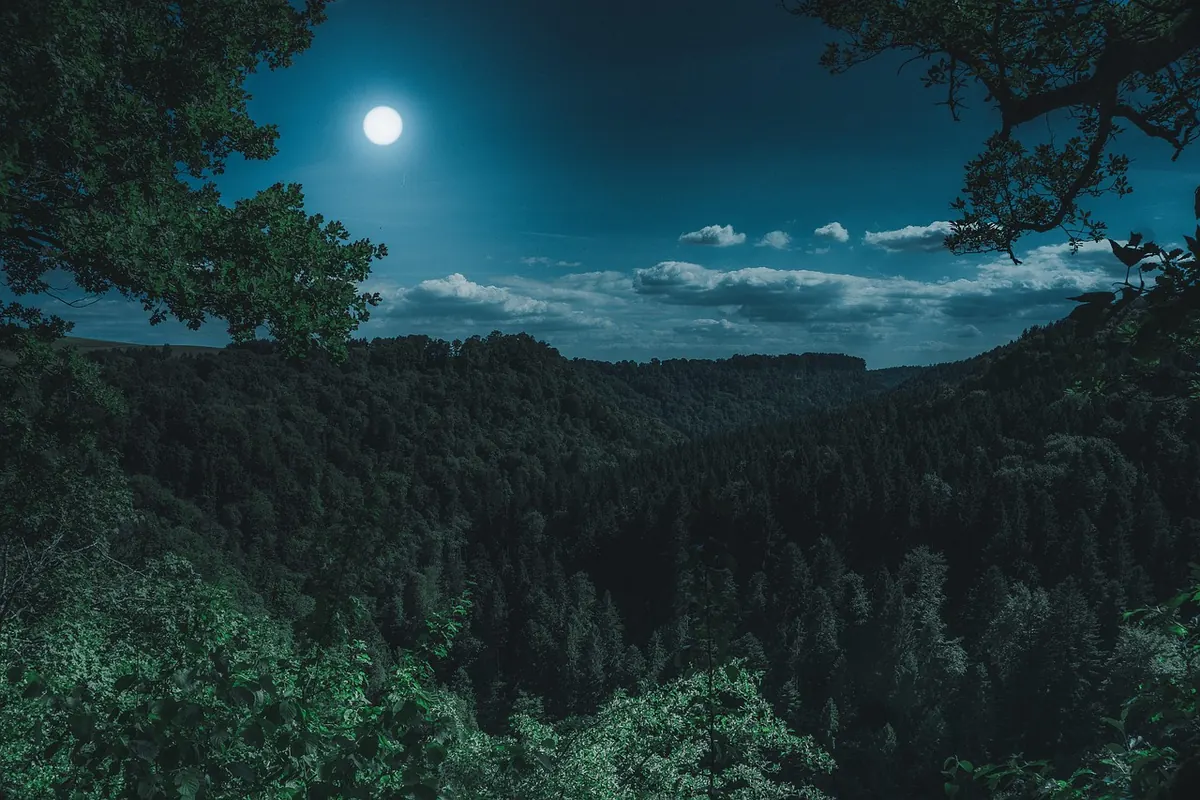
Two checks worth making the night before: look at your local weather radar after sunset. On a clear migration night, ground clutter and insects aside, you can sometimes see a broad bloom of returns spreading outward — migrants lifting off. And if the moon is up, spend a few minutes with binoculars on it. Silhouettes crossing the lunar disc are a genuine, old-fashioned way to gauge whether the sky is busy.
Those same north winds push other things, too. Monarchs and dragonflies ride the same weather systems, which is why a good bird morning is often a good insect morning.
A Month-by-Month Read of the Marsh
Late August to early September
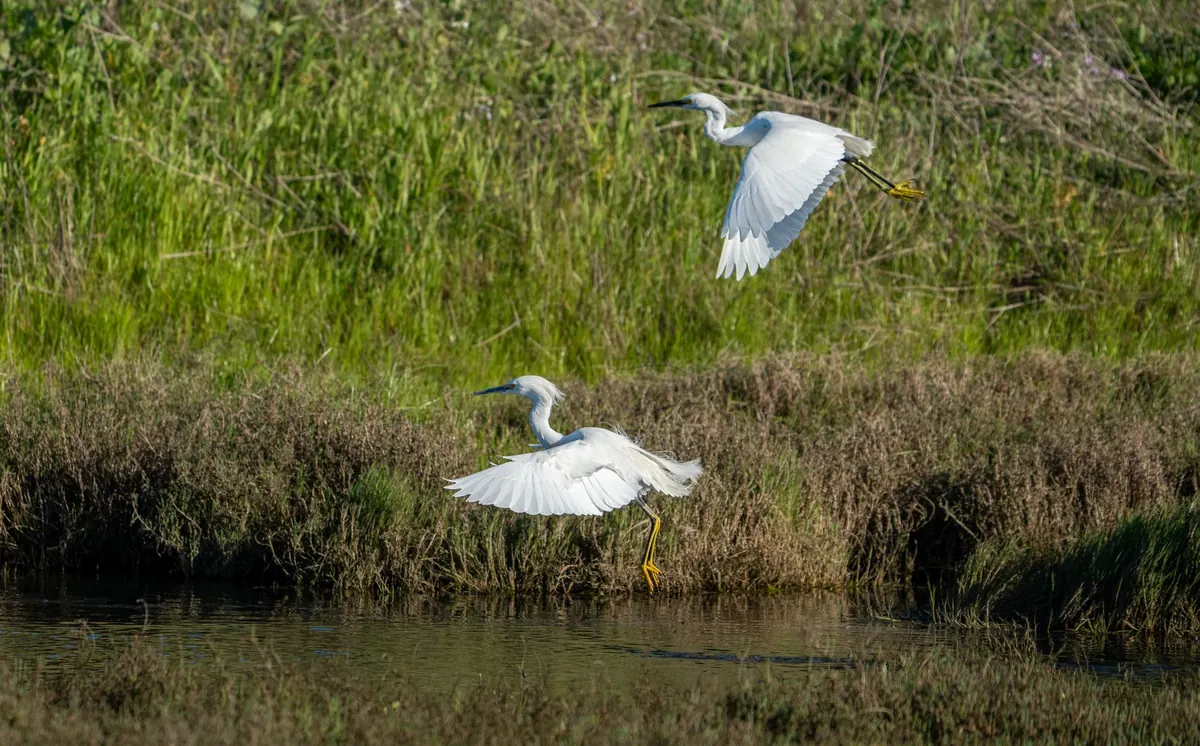
Shorebirds lead the way. Falling water levels expose mud, and the flats fill with yellowlegs, least and pectoral sandpipers, and snipe. Blue-winged teal — often the earliest ducks to arrive — show up on shallow pools, and post-breeding egrets and herons gather in loose flocks along the edges. Swallows stage over open water in the evening.
Mid-September to mid-October
This is the heart of it for many people. Sparrows pour into the reeds: swamp, song, white-throated, white-crowned, and the secretive Nelson's and LeConte's in wet meadow grass. Rails and wrens slip through the stems. Northern harriers quarter low over the marsh, kestrels and merlins hunt from snags, and sharp-shinned hawks work the hedgerows. Listen for chip notes — that thin, insistent ticking from deep cover is usually your first clue that a mixed flock is moving through.
Late October into November
Waterfowl take over. Dabbling ducks give way to divers — ring-necked ducks, scaup, redheads, ruddy ducks, hooded mergansers — along with coots, grebes and, on bigger waters, tundra swans and geese. Bald eagles become a regular sight, often just perched and watching. Hard frosts strip the goldenrod, and the marsh gets quieter, but what's left tends to be concentrated and easy to watch.
These patterns hold broadly across temperate latitudes. The farther north you are, the earlier everything shifts; coastal and southern marshes run weeks later.
On the Water and Mudflats
The best water to scan is almost never the big open middle. It's the shallow, muddy fringe where a pool meets grass — the kind of edge a scope can pick apart slowly. Birds rest and feed there, undistrubed, and oddities turn up in the margins.
Scan in strips rather than sweeping randomly. Start at one end of the flat, work left to right, then shift slightly farther out and repeat. Pay attention to shape and posture before color. A slim, long-legged bird probing steadily is a yellowlegs; a compact, crouched, stitching one is a peep; a chunky, round-bodied bird rocking forward is a snipe. In the shallows, watch how ducks feed: dabblers tip up, divers sink and disappear.
In the Reeds and Above Them
Sparrows are the reward of patience here. Rather than chasing them, find a sunny edge, stand still for ten minutes and let the reeds reveal their birds. A dry weed stalk that dips under a small weight is often a sparrow climbing to look around.
Above the marsh, keep one eye up. Harriers fly with a distinctive low, buoyant glide. Merlins go through fast and level, scattering everything. Swallows and blackbird flocks stream over on their way south, and an osprey working south along a river valley is a fine thing to catch in late September.
The Insect Migration Most People Miss
Two dragonflies do something remarkable in autumn: the common green darner and the black saddlebags head south, sometimes in loose feeding swarms along shorelines and ridge lines. On a cool morning after a front, look for darners perched on goldenrod heads, fence wires and dead twigs, warming up before moving on.
Monarchs use the same north winds. Late afternoon is the time to look for them, and if you find a marsh-edge tree with dozens clustered in the branches, that's a roost — worth watching quietly from a distance and leaving alone. Goldenrod and aster patches are the engine behind all of this, feeding the insects that in turn feed the warblers working the same stems. When you find a flowering edge, stop and give it fifteen minutes.
Plan the Day: Fieldcraft, Comfort, and Timing
Arrive before sunrise if you can. The first hour is when grounded migrants are most active and least wary, and when the light is soft enough to work into the marsh rather than against it. Walk the edges instead of straight through the middle, keep the sun behind you, and move in slow, deliberate steps. Resist the urge to pish constantly; on a crowded migration morning, it mostly just pushes birds away from the next person.
A short kit list goes a long way:
- Binoculars and, if you have one, a spotting scope. The scope earns its weight on mudflats and open water.
- Waterproof boots and layers. Marsh mornings are colder and wetter than the parking lot suggests.
- Insect repellent and a tick check at the end of the day. Tall grass and brush in autumn still warrant care; check clothing and skin and follow local guidance for your area.
- Water levels and tides. Check before you go. Falling water concentrates birds on flats; high water pushes them into the vegetation. On tidal marshes, plan around the tide rather than against it.
- A hunting-season check. Many marshes open to waterfowl hunting in autumn. Look up the dates for the site you're visiting, wear blaze orange if the seasons overlap, and consider visiting on a non-hunting day.
Then give it time. Fall migration rarely delivers everything at once, but it delivers something every week — and the marsh on the morning after a cold front is one of the best shows of the year.
Photo: ERod Photos / Pexels