

Common Mistakes New Nature Explorers Make in Wetlands (and How to Avoid Them)
Wetlands punish small assumptions about depth, direction, distance, and wildlife. Here are the mistakes beginners make most and the habits that prevent them.
A marsh teaches patience faster than it teaches anything else. From the edge of a boardwalk, the whole place looks soft and simple: green blades, open water, a few birds standing in the shallows. Step off the planks and the picture changes. Creeks fork into more creeks, the mud has opinions, and the horizon sits so low that the landmarks you were counting on quietly disappear. Beginners rarely get into serious trouble out here, but they almost always make the same handful of small errors first. Knowing them in advance saves you a wet boot, a wasted afternoon, or a close call.
The Ground Is Not What It Looks Like
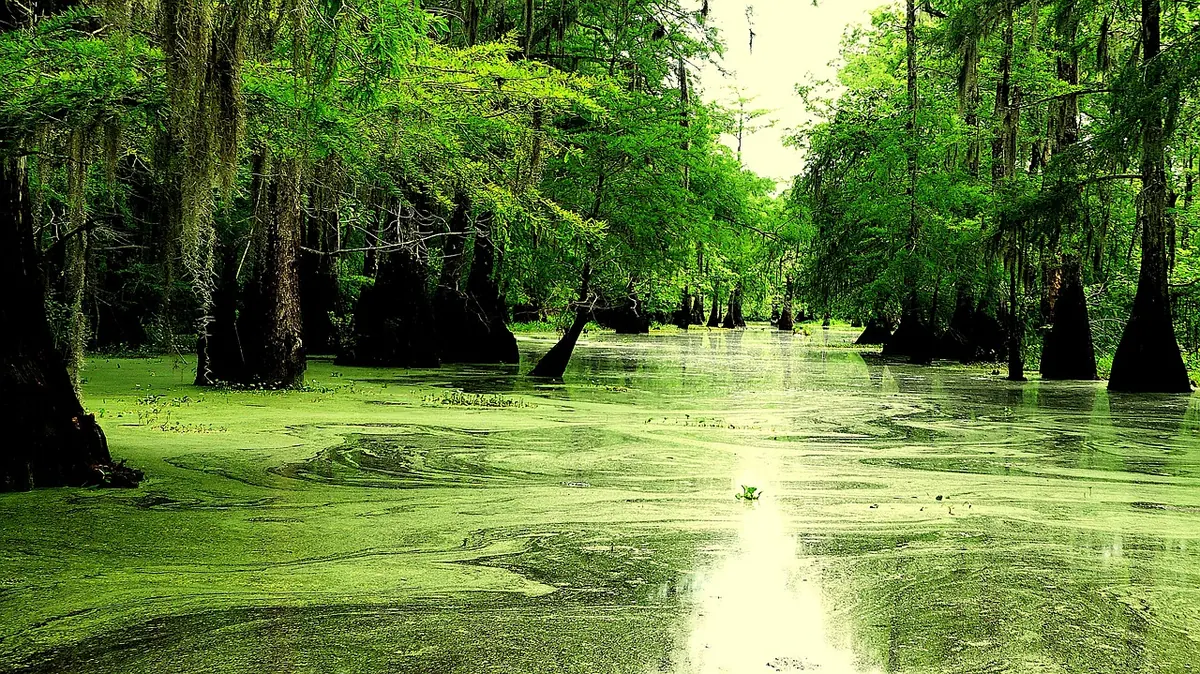
Bright green isn't grass. In wetlands, that vivid carpet is often duckweed, algae, or a floating mat of vegetation sitting on top of open water. It holds a little weight, then none. The same goes for mudflats that look firm and crusted after a dry week: two steps in, you're calf-deep, and your next step pulls a boot off.
Before you commit your weight, probe. A trekking pole, a sturdy stick, or a long-handled net poked ahead tells you whether you're standing on peat, packed sand, or soup. Walk on the raised tussocks of sedge and grass rather than the low, dark channels between them. Stay back from the undercut banks of creeks, which crumble without warning. If you do sink in deep mud, stop thrashing; spreading your weight by sitting back or lying flat and crawling to firmer ground works better than fighting. In some tidal estuaries, mud is genuinely dangerous, so treat unknown flats as off-limits unless someone local has told you otherwise.
When Every Creek Looks Like the One Behind You
Marshes are low and repetitive by design. There's no ridge to orient from, no distinct tree on the skyline, and the winding channels mean you can walk a quarter mile and end up fifty yards from where you started. The most common beginner mistake isn't getting lost in a dramatic way. It's wandering for forty minutes, recognizing nothing, and realizing you can't say which way the car is.
Fix that before you take the first step. Drop a waypoint where you leave the road, or note the entry point on a paper map. If you're using a phone, download the map area in advance, because marsh edges often have patchy signal, and carry a spare battery. A simple baseplate compass costs little and works when nothing else does. Then use it: take a bearing on your entry point and check it periodically, not just when you're already confused. As you walk, turn around every so often and look at the view behind you. The marsh you're heading into looks completely different from the marsh you'll be coming back through.
Three habits that keep you found
- Count junctions out loud as you pass them, and note which direction you turned.
- Pick a far landmark you can see over the reeds, like a water tower or a line of trees, and re-sight it every few minutes.
- Set a turnaround time, not just a destination. When the time comes, head back even if you're close.
Getting Closer to Wildlife Than You Meant To
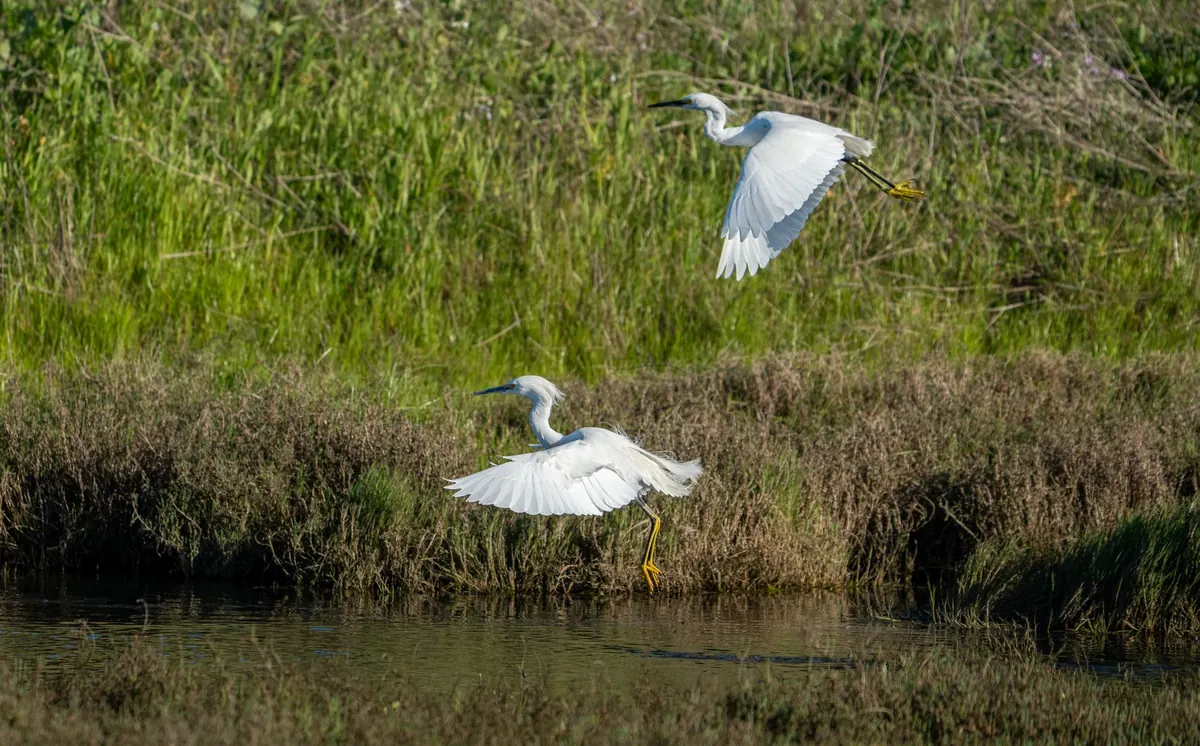
Wetlands concentrate life, which makes them irresistible and easy to disturb. Ground-nesting birds — rails, terns, killdeer, many ducks — rely on camouflage rather than defense. A person walking a straight line through nesting cover flushes the adult, and an exposed nest can overheat or be found by gulls and raccoons within minutes. Herons, egrets, and cranes may tolerate one slow observer at a distance, but they'll abandon a feeding area if someone keeps closing in.
The working rule is simple: if an animal changes what it's doing because of you, you're too close. Watch for the cues — a bird standing up from a sitting position, a head swiveling toward you, a sudden flush, a mammal freezing mid-step. Back away along the path you came, not in a new direction that pushes you deeper into cover. Use optics instead of your feet; a pair of binoculars or a zoom lens buys you the view without the disturbance. Keep dogs home or strictly leashed, and leave the drone behind. Playback recordings of bird calls are best avoided during breeding season, and never over a nesting colony. Spring through midsummer is the season to stay on the boardwalk and give everything extra room.
Safety Assumptions the Marsh Will Correct
Tidal wetlands change shape twice a day. A creek you waded across at noon can be chest-deep and moving fast by mid-afternoon. Check a local tide table before you go, and know when the water turns. Open flats offer no shade and no shelter, so heat and sun exposure build faster than they do on a wooded trail; carry more water than the distance suggests, and turn back early if you feel lightheaded or stop sweating. Fog rolls in quickly along water, and lightning over open marsh is a real hazard with nowhere to hide.
Insects are part of the experience, but ticks deserve attention. Long sleeves, pants tucked into socks, and repellent reduce bites, and a full check at the end of the day catches what gets through. If you find an embedded tick or develop symptoms afterward, talk to a healthcare professional rather than guessing. Cell coverage in wetlands is often unreliable, so tell someone your route and expected return time, and don't explore alone in an unfamiliar marsh. If you're planning anything beyond a short boardwalk walk, ask a local ranger, refuge office, or outfitter about current conditions; they know which channels flood and where the bottom is soft.
A five-minute routine before you step off the pavement
- Check the tide table and the weather forecast for the hours you'll actually be out.
- Drop a waypoint or mark your entry point on a paper map.
- Tell someone where you're going and when you'll be back.
- Confirm water, sun protection, and a way to keep your phone dry.
- Decide now what your turnaround time is, so it isn't a negotiation later.
Naming Things Without Guessing
Wetland plants are masters of looking alike. Sedges, rushes, and grasses fill the same spaces and can fool anyone relying on a quick glance; the old field rhyme about sedges having edges and rushes being round exists because the difference is subtle. Several wetland plants are toxic, and some closely resemble species people forage elsewhere, which is why eating anything you identify from a photo or an app is a bad trade. Identification gets more reliable when you record several features at once: leaf arrangement, stem shape in cross-section, habitat, season, and whether the plant grows in clumps or spreads. A photo of a single leaf rarely settles it.
Apps and community identification forums are useful starting points, not verdicts. Treat an auto-suggestion as a hypothesis and look for the features that would confirm or rule it out, including whether the species even occurs in your region. Do the same with birds: note silhouette, behavior, and call, not just color. Keeping a small notebook of dates, places, and descriptions builds real skill faster than collecting lifer lists.
What to Carry Forward
Most of the mistakes above come down to moving too fast in a place that rewards slowing down. Probe before you step. Mark where you came in. Look behind you. Keep your distance from anything with a nest, a den, or a chick. Carry water, watch the tide, and leave yourself more time than you think you need.
The best way to get good at wetlands is to return to one spot again and again through the seasons. Pick a single boardwalk, creek mouth, or marsh edge near home and visit it in April, July, and October. You'll learn how the water behaves, which plants arrive first, and where the birds actually nest. That familiarity is worth more than any gadget, and it makes every marsh you visit afterward easier to read.
Photo: Keishpixl / Pixabay