
Spring Amphibian Quest: How to Find and Identify Frog and Salamander Eggs
A practical spring guide to finding frog and salamander egg masses in vernal pools, telling wood frog, spotted salamander, toad and peeper eggs apart, and observing them safely.
Spring Amphibian Quest: How to Find and Identify Frog and Salamander Eggs
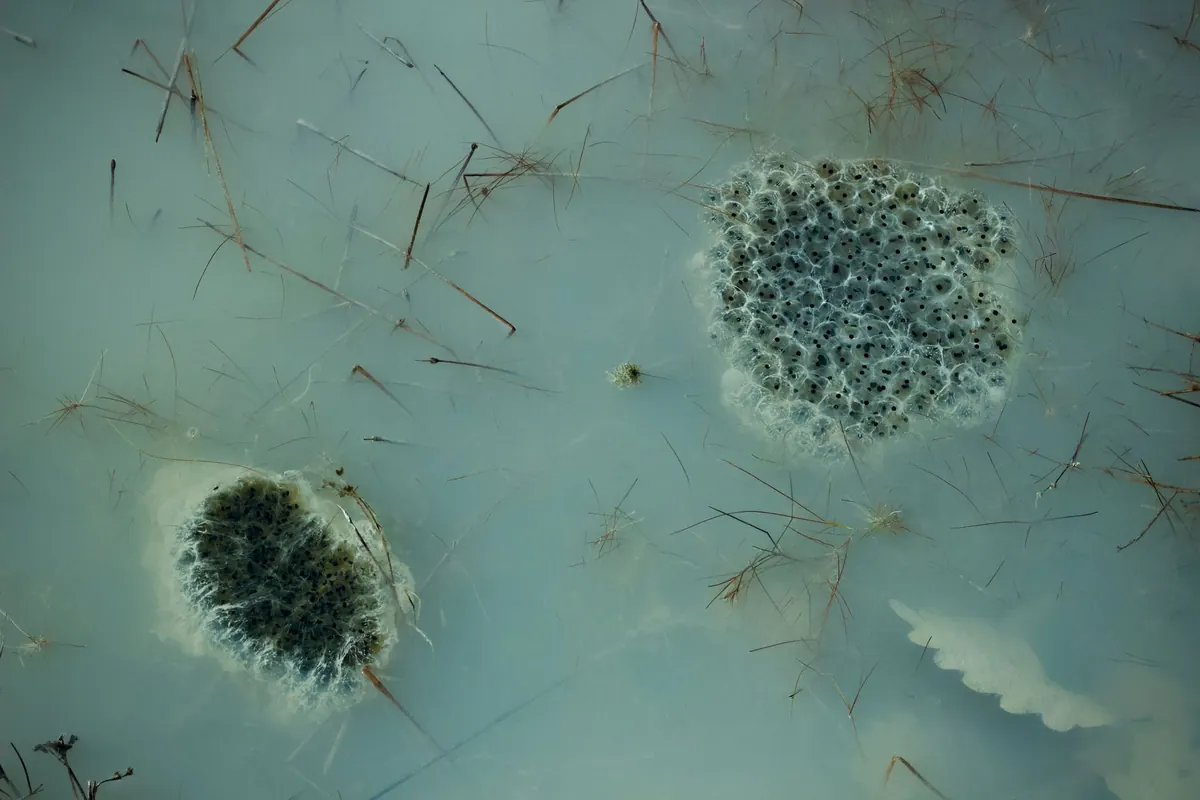
The rain starts on a Thursday night, and by Saturday morning the woods sound like a flock of ducks arguing in the fog. Those are wood frogs, and their chorus means the first egg masses of the year are already in the water. Finding them takes only a warm wet night, a small fishless pool, and an eye for jelly.
You don't need much gear. You do need to tread lightly and look closely, because everything interesting is either half-buried in leaves or floating an inch below the surface.
Time It Right: The First Warm Rain
Amphibians follow temperature and moisture, not the calendar. Across much of the United States and Canada, the trigger is a specific combination: rain falling on a night when the air stays above roughly 40°F (5°C), arriving after the ground has begun to thaw. In the Deep South and along the Pacific coast, that night might come in December or January. In New England, Ohio, and the upper Midwest, it usually lands between late February and mid-April — and it often arrives while snow is still melting in the shade of hemlocks.
If you get a warm, soaking rain in the forecast, plan to be at the pool the next morning. Eggs are freshest then: crisp outlines, dark embryos neatly dividing, no algae fuzz yet. A week later the same mass looks like a lump of green-gray pudding, and a month later it's a swarm of tadpoles or nothing at all.
Watch for "Big Night"
On the first proper rainy night of spring, mole salamanders and wood frogs migrate en masse from their upland burrows to breeding pools, sometimes crossing roads by the hundreds. Locally this is called Big Night. It is spectacular, and it is also when a lot of them die under tires. If you live near a crossing, an evening with a headlamp and a bucket (moving animals across, not home) is one of the most useful hours you can spend all year.
Where to Look: Small, Fishless, and Temporary
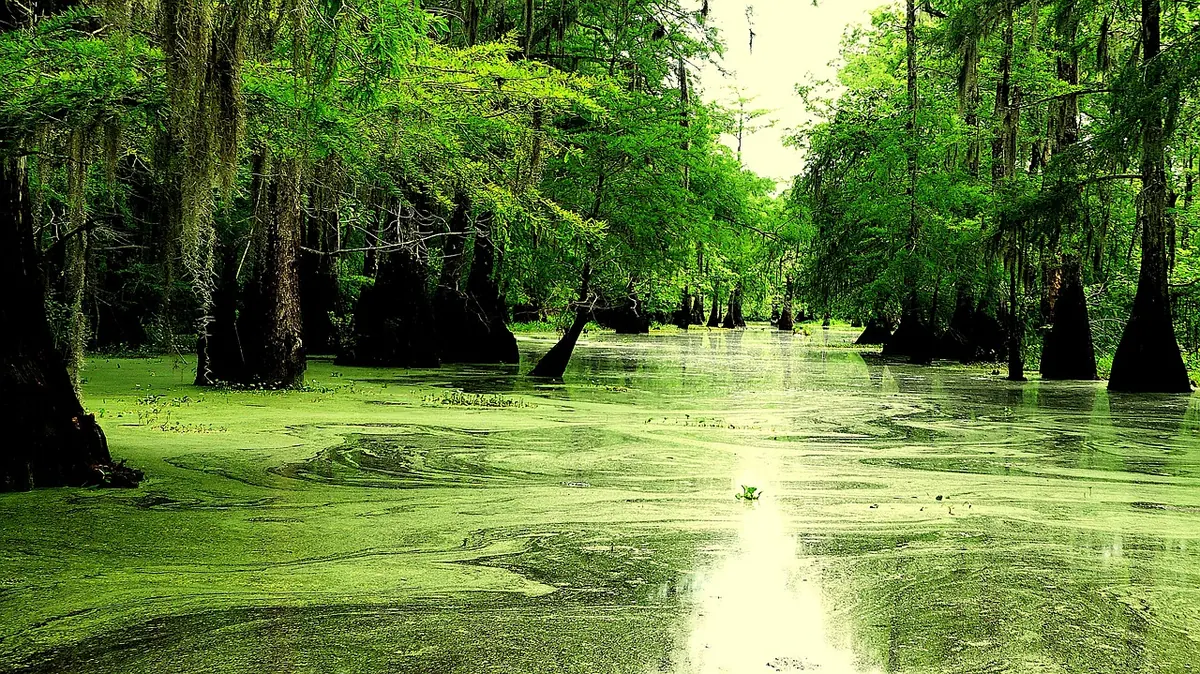
Forget big lakes and trout streams. The action is in vernal pools — shallow, seasonal basins that dry out by midsummer and therefore hold no fish. Look for:
- Depressions in the woods with dead leaves blackened at the bottom and a water line of stained leaf litter around the rim
- Buttonbush, highbush blueberry, and tussock sedge around the edges
- Water the color of weak tea, from tannins
- Drowned logs and submerged twigs, which are exactly what egg masses get glued to
- Roadside ditches and old farm ponds without fish — less glamorous, equally productive
Approach from the shore, kneel down, and let your eyes adjust. Most masses are within three feet of the edge, in water six to eighteen inches deep.
Reading the Jelly: Salamander Egg Masses
Spotted Salamander
The classic. A spotted salamander mass is roughly the size of a fist to a softball, firm and rubbery, and attached to a twig or stem like a knob. Freshly laid masses are milky white to translucent, with a distinct outer jelly layer over an inner cluster of round, dark embryos. Some take on a vivid green tint from Oophila algae living inside the jelly — a genuine symbiosis, with the algae trading oxygen for nitrogen. If you can hold a mass gently and it keeps its shape like a soft boiled egg, it's probably a spotted.
Blue-Spotted and Jefferson Salamanders
These species and their hybrid complex lay smaller, sloppier masses: ten to forty eggs in loose, fragile clusters that often look like handfuls of clear snot draped over a leaf. They fall apart if you poke them. Don't poke them.
Marbled Salamander
The contrarian. Marbled salamanders breed in fall, laying eggs in dry pool basins under logs and leaf litter, where the female coils around them until the rains come. If you find a small cluster of eggs under cover in October, that's your salamander.
Frog Eggs: Everything From Globes to Floating Sheets
Wood Frog
Wood frogs lay a single, grapefruit-sized globe of 500 to 1,500 eggs, usually attached to a submerged twig and often packed into communal clusters where dozens of females have stacked their masses. The jelly is soft and clear, the embryos are dark on top and pale below, and the whole thing feels like a water balloon full of tapioca. If a mass is free-floating and looks like a collapsed snowball, it's likely wood frog too.
Spring Peeper
No mass at all. Peepers lay single eggs, each one a clear jelly bead the size of a peppercorn, stuck individually to submerged grass stems. You find them by noticing the pattern, not the blob — a scatter of tiny glass marbles along a plant stalk.
American Toad
Toads lay long, narrow gelatinous strings, like a double strand of clear beads, that drape over shallow vegetation and often tangle together. If you find a rope, you've found a toad.
Bullfrog and Green Frog
These two lay a floating film — a slick, speckled sheet on the surface with a black-and-white salt-and-pepper look from above. Bullfrog sheets can hold up to 20,000 eggs and cover several square feet. Green frog sheets are smaller and usually hug the vegetated shallows.
Quick Field Guide: Six Egg Types at a Glance
- Firm, round mass on a twig, milky center — spotted salamander
- Loose, fragile cluster that falls apart — blue-spotted or Jefferson salamander
- Grapefruit globe of dark-on-top embryos — wood frog
- Single jelly beads on grass stems — spring peeper
- Long tangled strings — American toad
- Floating speckled film — bullfrog or green frog
If there's no jelly, there's no amphibian egg. Algae clumps, jelly fungi, and even star jelly come in many textures — but only eggs have round, uniform embryos suspended inside a clear envelope.
Gear, Fieldcraft, and Not Wrecking the Pool
A headlamp with a red setting, knee-high boots or waders, a clear-bottomed viewing bucket, and a hand lens will cover nearly everything. Polarized sunglasses are a cheat code for spotting masses under glare.
The rest is restraint. Egg masses are permeable and delicate; sunscreen, insect repellent, and dry hands can all damage them. Walk the shoreline instead of wading, don't shift logs, and never take eggs home — in many states collecting amphibian eggs requires a scientific permit, and in others it's outright illegal. Most of all, clean and dry your boots and net between wetlands, because chytrid fungus, ranavirus, and Batrachochytrium salamandrivorans hitchhike on damp gear. A ten-minute dry-out is worth a whole pond of frogs.
Log It, Report It, Protect It
Your observations are worth more than a good morning out. Photograph each mass with something for scale, note the date and location, and upload it to iNaturalist or HerpMapper. In several states, documented evidence of obligate vernal pool breeders is what earns a pool legal protection from development — meaning a single geotagged wood frog mass can matter for decades.
Check whether your state has a vernal pool certification program, and consider sending records to your local land trust or conservation commission. The data gets used. The pools get saved.
Then go back in June, when the water has dropped and the leaves are dry, and see what you were actually looking at. The jelly will be gone. The frogs will be in the woods. Wait for the next warm rain.
Photo: Peter Dyllong / Pexels