

Marsh Birdwatching for Beginners: 10 Species to Identify by Sight and Sound
Ten marsh birds worth knowing, with the field marks and calls that separate them, plus beginner-friendly tips for finding the ones that prefer to stay hidden.
Stand at the edge of a cattail marsh in May and you hear the place before you see it: clicks, trills, buzzes, and a gurgle that sounds like water running through a hollow log. Marsh birdwatching has a reputation for being difficult, and there is some truth to it. The birds are close, but the habitat is built specifically to hide them.
The good news is that a marsh runs on a short roster. Learn ten species and you will recognize most of what you see and hear on a typical visit, from a boardwalk in a city park to a flooded field at the end of a dirt road. Start with the noisy ones, add the skulkers when you're ready, and let your ears do half the work.
Species You'll Spot Before You Hear Them
These four sit out in the open, often on the water or at its edge. If you are new to binoculars, they will teach you how to use them.
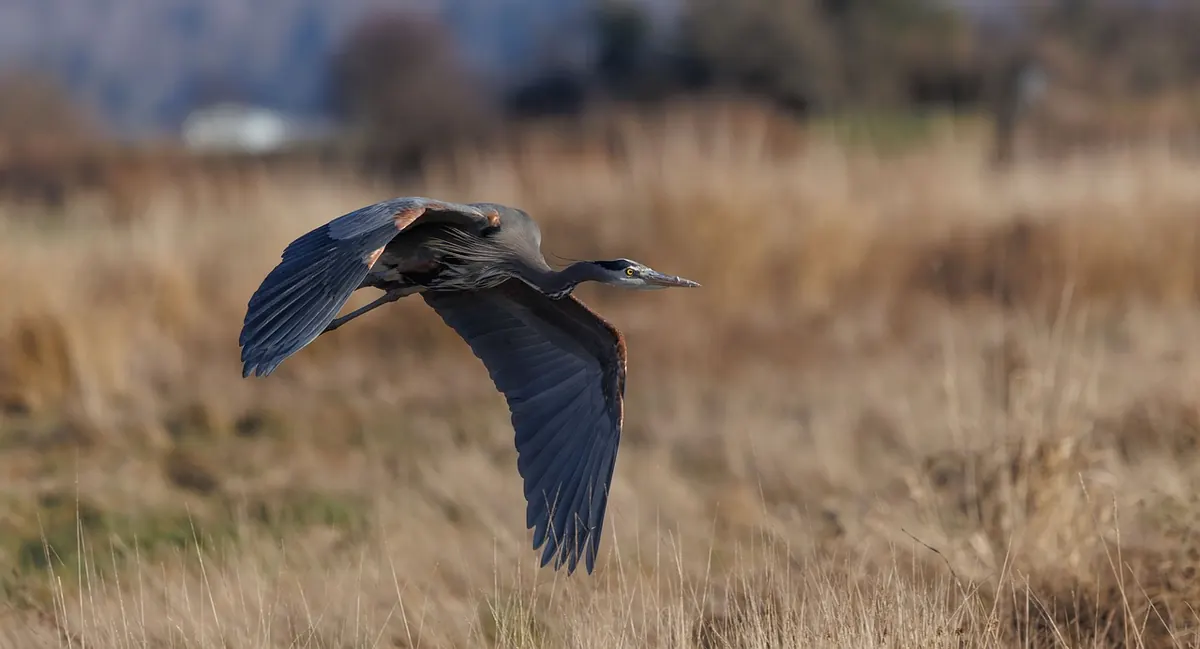
Great Blue Heron
A tall blue-gray bird with a dagger of a bill, a black stripe over the eye, and long plumes trailing from the head. Watch it hunt: it stands motionless, then strikes. If one flies up, note the neck folded back in an S shape and the legs trailing behind. The call is a harsh, rasping croak, the sound of a dinosaur that has learned to fish.
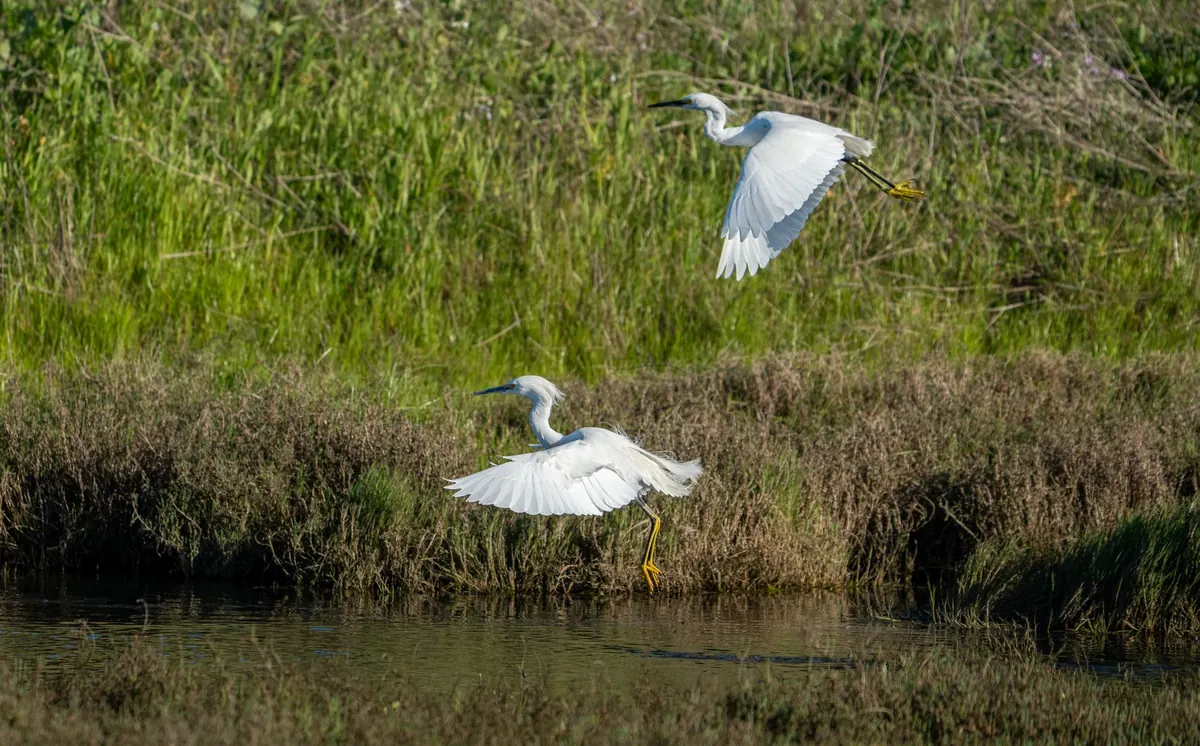
Great Egret
All white, with a yellow bill and black legs. In flight the neck stretches straight ahead, unlike the heron's folded neck. An egret stalks more actively than a heron, sweeping its bill through shallow water. Its voice is a low, gravelly croak, quieter than the heron's.
Belted Kingfisher
Listen for a loud, dry rattle over the water; look up and you'll usually see a stocky blue-gray bird with a shaggy crest and an oversized bill, flying fast and level. It perches on dead branches and dives headfirst for fish. Unusually among birds, the female is the more colorful one, with a rusty band across the belly.
Wood Duck
The male looks hand-painted: a crested head with green and purple gloss, red eye, white chin strap, and chestnut breast. The female is gray-brown with a soft white teardrop around the eye. Wood Ducks favor wooded swamps and quiet backwaters, and they often perch in trees. Listen for the female's rising squeal in flight, often written as oo-eek.
The Voices in the Cattails
These small birds stay low, so you'll often identify them by sound first and confirm with a careful look.
Red-winged Blackbird
Males are glossy black with a scarlet shoulder patch edged in yellow, and they sing from the tops of cattails all spring with a liquid conk-la-ree. Females are brown, heavily streaked, and look almost like large sparrows. If you see a brown bird chasing a black one, you're watching a pair, not two species.
Marsh Wren
Small and brown, with a bold white eyebrow, a dark cap, and a short tail usually cocked straight up. It sings a rapid, buzzy, chattering trill that sounds like an insect with an attitude, often while gripping two cattail stems at once. Seeing one takes patience: pick a singing bird, keep your binoculars up, and wait for it to climb.
Common Yellowthroat
A small warbler of wet weeds and shrubby edges. The male wears a black bandit mask bordered with white. The song is a cheerful, repetitive witchity-witchity-witchity. Yellowthroats stay buried in vegetation, so learn the song and you'll know they're around long before one pops up.
Swamp Sparrow
Rusty wings, gray face, a dark line through the eye, and a short tail. It sings a slow, sweet trill on a single pitch, more musical and less mechanical than a Chipping Sparrow's. Look for it walking on mud and floating vegetation rather than up in the stems.
Rails and Bitterns, the Marsh's Secret
These two are the reason people get hooked on wetlands. They can be common in good habitat and still almost impossible to see, because their whole strategy is to look like the vegetation around them.
- Virginia Rail: a small, chicken-shaped bird with a long reddish bill, gray cheeks, and a rusty breast. It walks on floating mats of plants. Its call is a series of descending grunts, like someone slowly squeezing a rubber toy. A pair duetting sounds like a quiet conversation in the reeds.
- American Bittern: streaked brown, with dark stripes down a pale neck. When alarmed it freezes with its bill pointed straight up and sways with the reeds, which makes it nearly invisible. Its song is a deep, resonant pump-er-lunk, carrying across the marsh like an old wooden hand pump.
If you hear a descending whinny, that's a Sora, a third secretive rail worth adding to your list.
How to Learn a Call in an Afternoon
Sound is not a backup skill in a marsh. It's the main one. This routine works.
- Pick one bird for the week. Ten at once is a mess.
- Listen to recordings at home using a field guide app or an online sound archive such as the Cornell Lab
Photo: Veronika_Andrews / Pixabay