
Ethical Wildlife Photography in Wetlands: How to Observe Without Disturbing
How to photograph wetland wildlife without causing harm: distance, camouflage, nesting season, and leave-no-trace fieldcraft that keeps birds and marshes intact.
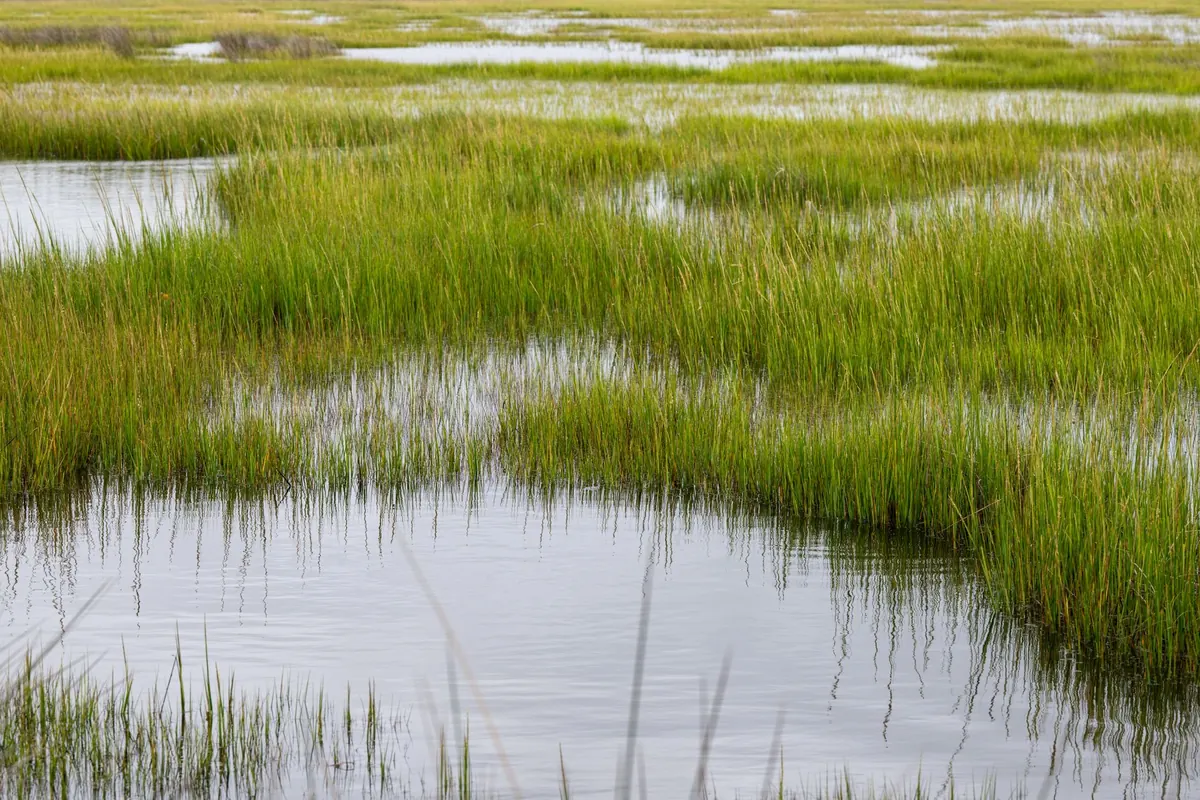
Wetland mornings are loud in ways that matter. A heron lifting off a marsh edge spooks every bird behind it, and one careless step into a reedbed can flatten the cover a nesting warbler depends on. That is the tension at the heart of wetland photography: the frame you want is sometimes the one the animal pays for. Fieldcraft solves it — knowing how close is too close, when to walk away, and how to leave the marsh as you found it.
Distance Is the Whole Game
Most photographers close the gap with their feet when they should close it with glass. A long lens beats creeping twenty metres closer through open water, and distance changes the animal you get: a relaxed bird preens, feeds and hunts, while a bird aware of you does none of that.
The difference is not subtle. A bittern standing in reeds at forty metres, cropped tight, makes a better photograph than a bittern at eight metres the instant before it vanishes into the stems. Behaviour is the picture; patience is the lens.
Move in stages. Stop, watch for a full minute, then step forward only when your subject's head is down, hunting, or facing away. Stay low, use cover, and avoid breaking the skyline — most wetland species read a silhouette above the reeds as danger. Approach obliquely rather than head-on, because a direct line looks like a stalk. Walk into the wind so your scent drifts behind you, and let the sound of the marsh mask your footfalls.
Learn the signals that mean you have pushed too far:
- A head comes up and turns toward you; a heron's neck straightens and it freezes.
- Feeding, preening or resting stops mid-motion.
- Other species react first — alarm calls from terns, gulls or songbirds are reliable early warnings.
- A bird crouches flat, or a group moves away as one.
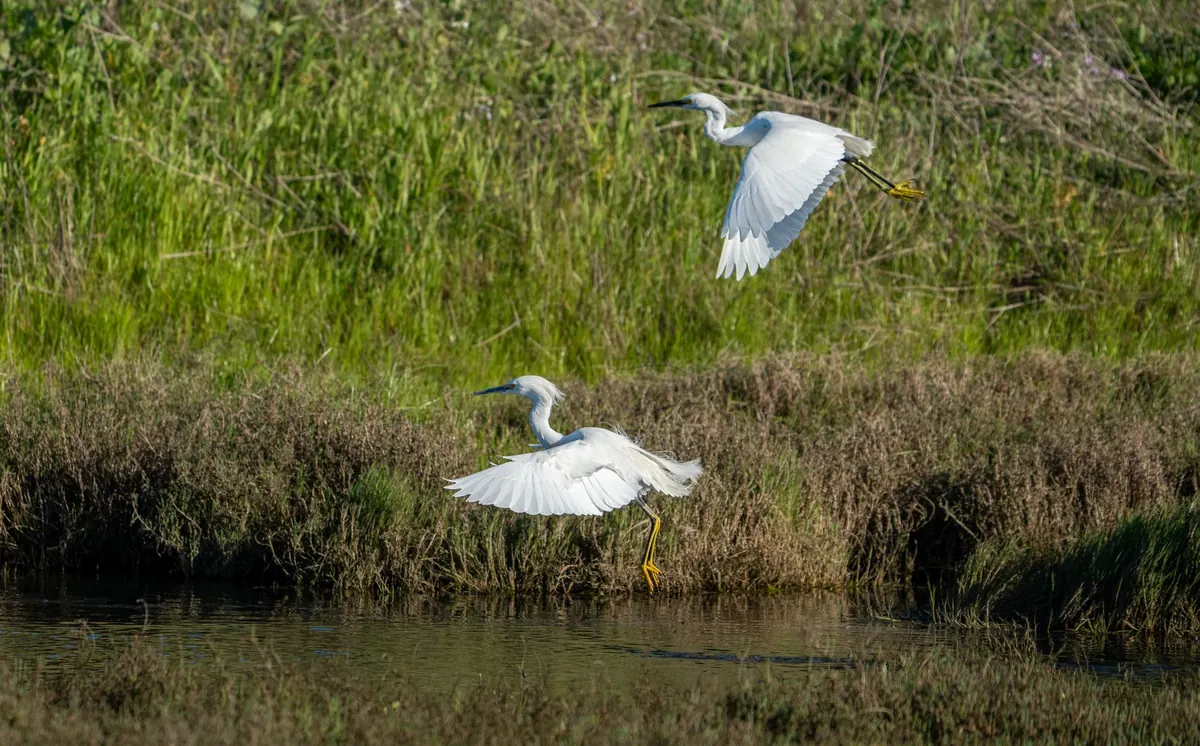
- Anything flushes. If it flew or ran because of you, you were too close.
Treat those as a hard stop. Withdraw slowly, without eye contact, and settle in somewhere else. As a rough working guide, think in tens of metres: shy species such as bitterns and rails need considerably more room than a diving duck on open water, and a bird on a nest needs the most of all. If you are unsure whether you are too close, you already are.
Camouflage That Actually Works
You are not trying to disappear at close range, only to stop looking like a person. Solid black or navy reads as a predator; olive, brown and grey blend with mud and reed. Cover your hands and face, which glow as pale patches, and drape netting over the lens hood. Avoid strong detergent and heavy insect repellent on your outer layers — scent carries a long way in still, humid air.
Then deal with noise. Strip velcro, silence camera beeps and autofocus assist lights, and use an electronic shutter where you can — a mirror slap carries across still water. Pack nothing that rattles; a soft fleece beats a crinkling waterproof every time.
A pop-up hide left in place for days, approached from the same direction each time, blends in far better than one you carry in and out. Birds habituate to predictable, harmless objects and often resume normal behaviour within minutes of your settling in, provided you then stay still. Working close to nests usually calls for a permit or a designated hide on reserves, and not without reason.
Nesting Season Means Backing Off
Nesting dates shift with latitude and species, but the principle holds: from courtship until young disperse, birds are at their most vulnerable. An adult flushed from a nest leaves eggs or chicks exposed to cold, rain and predators within minutes, and repeated disturbance can end the attempt entirely. Eggs chill faster than most photographers assume; on a grey, windy morning, ten minutes off the nest can be ten minutes too long.
Skip the nest close-up. If a nest photograph genuinely matters, use a remote camera positioned from a distance, check it infrequently, and get permission where it is required. Do not cut, bend or tie back the vegetation screening a nest. Stay well outside heronries, gull colonies and raptor territories, and give fledglings room — they are clumsy, not abandoned.
If the bird is looking at you, it has stopped being the bird you came to photograph.
Check the rules before you go. Many countries protect wild birds at their nests by law, and reserves close sensitive areas seasonally. A permit is not a formality; it is the reserve's way of trading a few photographs for a colony's survival.
Let the Water Set Your Timing
Wetlands run on cycles, and the smartest fieldcraft is often just arithmetic. Tide, water level and daylight decide where birds will be and when, so plan around them rather than chasing birds across a mudflat.
- Tide: a rising tide pushes feeding waders and wildfowl toward the shore, where they come to you. A falling tide draws them out to distant mud — a good time to sit rather than follow.
- Light: arrive before sunrise, set up, and let the marsh wake around you. Birds that settle after your arrival stay relaxed; birds you arrive on top of do not.
- Wind: walk into it for both scent and sound. Use gusts as cover to move on a breezy day; on a still day, plan to move hardly at all.
- Season: outside the breeding season, birds are more tolerant and the pressure on them is lower. Winter wildfowl gatherings are a far gentler subject than spring nesting attempts.
Sit for half an hour before you expect anything. Most wetland species need time to accept a shape that has not moved, and the best moments arrive once you have stopped being an event.
Leave No Trace in a Wetland
Wetland ground is soft, and soft ground remembers. Footprints and crushed vegetation can persist for weeks, and repeated trampling turns a nesting reed edge into a bare bank. Stay on boardwalks, trails and established paths rather than wading into the shallows for a better angle.
Beyond your feet:
- Do not move logs, rocks or vegetation to reveal a subject; they are cover for something smaller.
- Clean and dry boots, tripod feet, waders and boat hulls between wetlands to avoid moving seeds, mud and invasive species.
- Never bait, call or lure wildlife into position, and never use playback to pull a territorial bird away from its nest or chicks.
- Take everything out with you — line, lens caps, wrappers and drifting plastic look like food to a swan.
- Keep drones grounded near birds; both the noise and the passing shadow register as a predator.
If you are working from a boat, keep to channels and slow right down. A wake erodes banks and floods nests that were dry a minute earlier. Cut the engine well short of a raft of ducks and drift in.
Ethics Don't Stop at the Shutter
How you use an image matters too. A photograph that required disturbance should not be presented as a lucky encounter, and a nest site posted with its location can send a hundred people to the same reedbed the following weekend.
A few habits worth keeping:
- Caption honestly — say when an image came from a hide, a remote camera or a reserve with a permit.
- Strip location data from images of nesting or roosting sites before posting them.
- Decline the shot rather than the ethics: no flushing for flight images, no baiting, no nest close-ups.
- Speak up gently. Most disturbance comes from people who simply do not know, and a calm word goes further than a lecture.
Ethical photography is not a constraint on good images. It is the reason they are good — a bird behaving naturally, in a place that still works, photographed by someone who took nothing from it but light.
Photo: A G / Pexels